knowledgeOptimizing CRO-Sponsor Collaboration: Mitigating Risks in Bioanalytical Study Reporting
 Bioanalytik
Data Integrity
Reporting
Quality Control (QC)
Bioanalytik
Data Integrity
Reporting
Quality Control (QC)
Manual processes in bioanalytical studies jeopardise efficiency, data integrity, and compliance – especially under the strict ICH M10 requirements. This article shows how digital platforms like StudyGen 360 leverage centralised data access, real-time collaboration, and automated workflows to minimise errors, accelerate studies, and future-proof CRO–sponsor relationships.
Why digital transformation is essential for CRO–sponsor partnerships
Modern clinical development relies more than ever on productive collaboration between contract research organisations (CROs) and sponsors. However, continued dependence on manual, non-digital processes creates avoidable risks, inefficiencies and compliance challenges. Drawing on insights from our recent webinar, ‚Mitigating the Risks of Non-Digital Study Reporting Processes‘, this article explains how automated workflows can streamline relationships between CROs and sponsors, safeguard data integrity and ensure regulatory compliance.
The risks of manual reporting in bioanalytical studies
Data integrity risks:
There is no closed-loop system from sample receipt to final report.
-
Manual data transfer between disparate spreadsheets.
-
Increased potential for transcription errors and misalignment in decimal handling.
Even validated Excel spreadsheets cannot guarantee complete data consistency.
Operational complexity:
-
Customised, complex Excel templates are required for each process step.
-
Delayed delivery of study results and increased error probability due to manual touchpoints.
-
Inconsistent processes due to sponsor-specific template variations.
Time and resource drain:
-
Labour-intensive manual creation and validation of reports.
-
Integration of charts and graphics is difficult and error-prone.
-
Prolonged review cycles slow down decision-making.
Regulatory Pressures: Focusing on Data Integrity
ICH M10 Guidelines: A New Documentation Standard
The evolving regulatory environment places an unprecedented emphasis on transparency and data integrity. The ICH M10 guidelines represent a significant shift in documentation requirements, stipulating that data which was previously only kept on site must now be included in formal study reports.
Under these new requirements, bioanalytical laboratories must maintain comprehensive documentation of reference and internal standards, critical reagents, stock and working solutions, blank matrix handling, calibration standards, quality controls, standard operating procedures and sample tracking. This information is no longer just supporting documentation — it is now part of regulatory submissions, making GLP compliance and data integrity rules mandatory throughout the entire process.
Expanded Documentation Needs
-
Reference and internal standards details
-
Reagent, stock, and working solution documentation
-
Blank matrix handling logs
-
Calibration/QC data and traceability
-
Comprehensive sample and process tracking
-
SOPs as part of submission files
This data is now part of regulatory documents, making GLP compliance and data integrity rules mandatory throughout the entire process.
ICH E6: Sponsor Accountability Remains
Even when a CRO conducts the study and manages the data, the sponsor is ultimately responsible for the quality and completeness of the submitted data. This means:
-
Transparent access to all data and workflows is required.
-
Real-time visibility and standardized, auditable procedures are expected.
-
Audit trails should be readily accessible to support regulatory review.
Quantifying the Benefits of Digital Transformation
Efficiency Gains
|
Study Size |
Manual Hours |
Automated Hours |
Savings (per 30 studies/year) |
|---|---|---|---|
|
Small (1–5 runs) |
12 |
2 |
300 hours |
|
Large (10–100 runs) |
56 |
4 |
1,560 hours |
|
Total |
68 |
6 |
1,860 hours/year |
Beyond Time Savings: Quality & Compliance Improvements
While time savings provide immediate operational benefits, the long-term advantages of automated systems in terms of quality and compliance are often more valuable. Automated workflows eliminate transcription errors that could compromise the integrity of a study, create comprehensive audit trails to support regulatory inspections and establish standardised processes to ensure consistent compliance across all studies and sponsors.
StudyGen 360: Enabling Transparent CRO-Sponsor Collaboration
Centralized Data Access for All Stakeholders
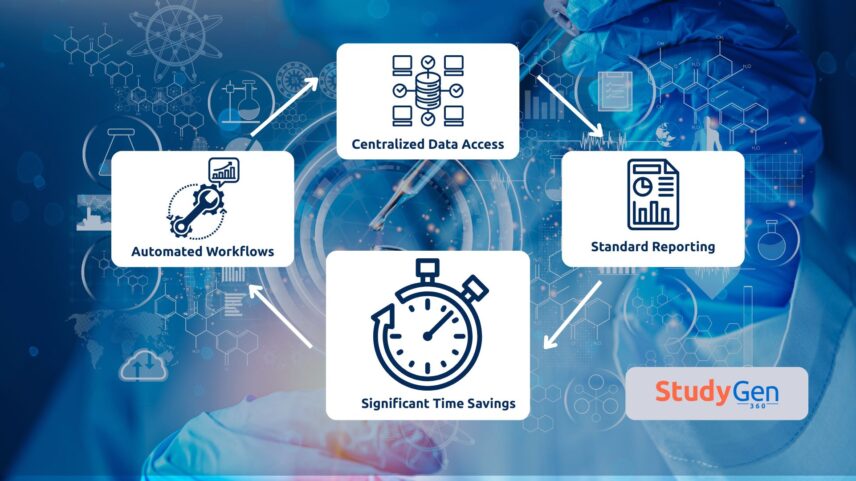
StudyGen 360 addresses the unique challenges of bioanalytical study management by providing a secure, cloud-based platform that is specifically designed for regulated environments. Rather than forcing laboratories to adapt general-purpose software to their specialised needs, our solution provides native support for bioanalytical workflows, instrument interfaces and regulatory requirements.
The platform fosters transparent collaboration between CROs and sponsors throughout the study lifecycle. Real-time data sharing eliminates the traditional delays associated with batch reporting, while centralised document management with comprehensive version control ensures that all stakeholders are working with the same information.
Why StudyGen 360?
-
Tailored for Regulated Environments: Native support for bioanalytical workflows, instrument integration, and regulatory documentation.
-
Centralized Data Access: Enables secure, real-time collaboration among all stakeholders, including CROs, sponsors, and auditors.
-
Automated Raw Data Processing: Direct interface with analytical instruments (e.g., Sciex), automated reporting, and data integrity controls.
-
Compliant by Design: ICH M10 requirements are built into the reporting process and the system is future-proof with ongoing regulatory updates.
Upcoming (2025): Even broader support for complete sample metadata, full-lifecycle audit trails, device integration, and enhanced regulatory features.
Implementation Roadmap: From Manual to Automated
|
Phase |
Key Actions |
|---|---|
|
Assessment |
Map existing manual processes, identify data integrity/compliance gaps, quantify manual workload. |
|
Implementation |
Deploy version control (e.g., SharePoint), build automated reporting workflows, centralize data repositories. |
|
Optimization |
Standardize templates, automate QA checks, set up real-time monitoring and alerts. |
Transforming CRO-Sponsor Relationships
StudyGen 360 gives Contract Research Organisations (CROs) a competitive advantage by reducing manual effort, speeding up turnaround times, improving data quality and enhancing client satisfaction through unprecedented transparency. Rather than requiring sponsors to wait for batch reports, CROs can differentiate themselves by offering them real-time access to study progress and data.
Sponsors benefit from real-time visibility of study operations, assured data quality through automated checks and validations, faster decision-making capabilities thanks to immediate data access, and the ability to fulfill their regulatory responsibilities while effectively leveraging CRO expertise.
Looking Ahead: The Future of CRO-Sponsor Relationships
The pharmaceutical industry is at an inflection point where traditional manual processes can no longer support the complexity and speed demands of modern drug development. Regulatory agencies increasingly expect sponsors to have real-time visibility into CRO operations, while competitive pressures require faster study turnaround times and higher data quality.
Successful CRO–sponsor partnerships will be defined by their ability to leverage automated workflows that reduce manual errors, implement centralised platforms that enhance transparency, establish standardised processes that ensure compliance and deploy real-time collaboration tools that accelerate decision-making.
Accelerate Your Bioanalytical Studies Today
The transition from manual to automated bioanalytical workflows is not just about efficiency; it is also about ensuring data integrity, regulatory compliance and gaining a competitive advantage in an increasingly complex regulatory environment.
Ready to optimize your CRO-sponsor collaboration?
StudyGen 360 offers a proven platform for transparent, efficient bioanalytical study management. Our customers typically implement it within weeks, not months, and see immediate improvements in data quality.
up to data has been supporting pharmaceutical and life sciences companies with automated laboratory processes for regulatory study data management for over 20 years. Our solutions eliminate data silos, implement secure automated data transfer processes, and reduce manual activities while ensuring full regulatory compliance.